One day. Forty-nine seconds of 1999 corporate cosplay. No crew, no camera, no actors, just GPUs.
Project
Serious People brand reel
Output
00:49 · 15 shots · desktop + mobile formats
Creative director
Claude Design
Stack
Claude · gpt-image-1 · Runway Gen-4.5 · ffmpeg
Timeline
One day · three production passes
Total cost
≈ $60 in API credits
Status
Shipped
FIG. 00 · The finished reel. Every frame was generated. It loops silently on the homepage.
We at Serious People like to do serious work without taking ourselves too seriously, so we wanted you to be able to see that and feel that the moment you landed. We set out to bring the brand to life. Here's our whole process, mistakes and dead ends included.
§ 01Origin
Why we're called Serious People
We believe that to do genuinely serious work, you can't take yourself too seriously. The best operators we know hold both: real rigor about the work, and zero precious-ness about themselves. We want to work with people who feel the same way.
So "Serious People" — say it with a straight face and a raised eyebrow — is meant to be a homing beacon for clients and coworkers with a sense of humor and humility. We wanted it to be the first thing you know about us.
§ 02Direction
We hired Claude as our creative director
We started with Claude Design playing the role of creative director. Here was our first prompt:
Serious People is meant to be a brand targeting mostly small to medium businesses and some larger businesses that is a bit cheeky about its personality. It conveys its seriousness by saying it in the name, thereby implying that it's not. Think a kid in grown-up's clothes or someone going out of their way to look the part of a businessman. It's a fine balance to convey serious but not actually serious, and I need your help defining that look. One source of inspiration is the TBPN promo real from its early days. I imagine things like 80s power suits, people striking business poses, exaggerated briefcase carrying, sending faxes, etc.
Claude instantly understood what we were going for: deadpan, clipped, written like an internal memo, pulling from the register of Amazon leadership principles, 1999 annual reports, legal disclaimers, and Bloomberg terminal headers. And then it fucking nailed it:
The Brand, In One Line
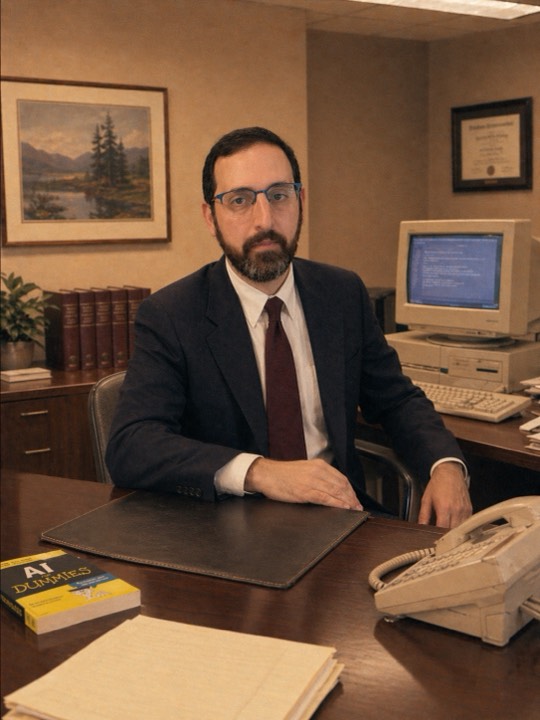
Y2K enterprise cosplay as a Trojan horse for modern AI work — a navy-suited man squinting at a CRT that happens to be running Claude.
Corporate-seriousness played so straight it tips into comedy. Every joke is a noun, never a verb. The camera never winks. If you know, you know — and if you don't, it's just a quiet office.
Claude had more to say on visual treatments, offering a monochrome Xerox grade for documents and props, and a warm, desaturated Tan grade for people and rooms. Monochrome wasn't funny. Desaturated tan was very funny.
Xerox · mono
Tan · warm
FIG. 01 · The two grades that survived the exploration, on the same frame. Xerox for paper and props; Tan for people and boardrooms. The grade is a decision, not a filter.
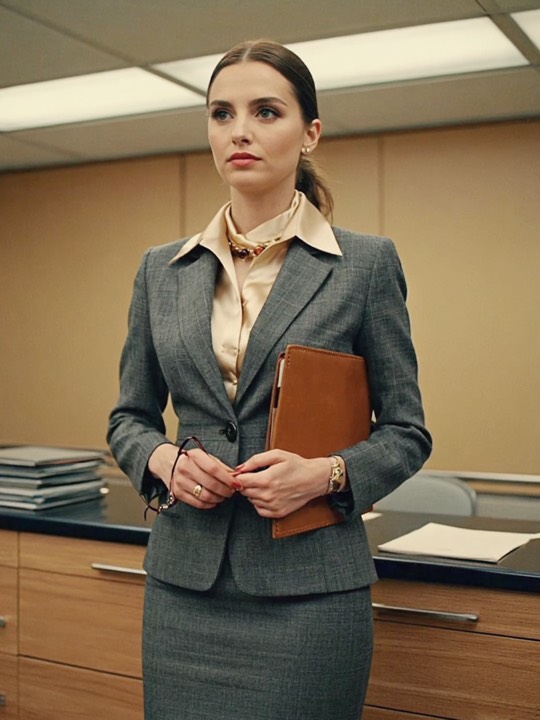
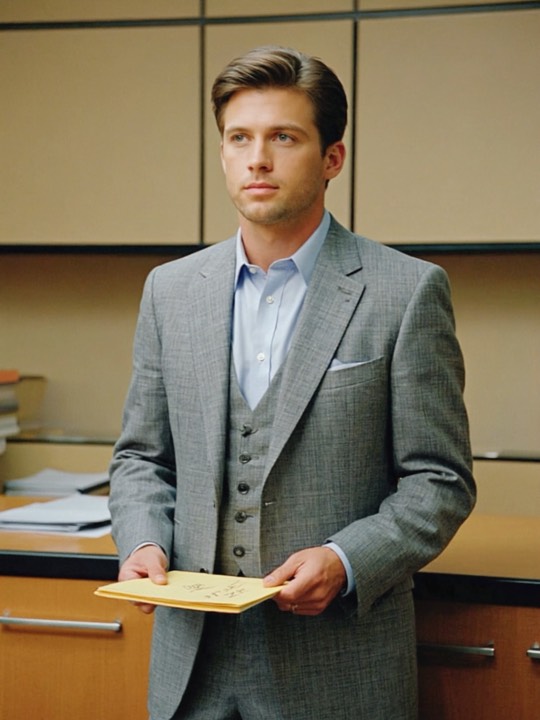
Then, casting. Six recurring characters, each defined not by a face but by a suit, a signature prop, and a tell. We don't mind if the generators drift on faces — it helps land the joke if the image is ever so slightly off — so we let it happen.
Noah
Principal
Hand on hip when he's thinking.
Marlene
Managing Director
Reading glasses on a chain.
Del
Senior Associate
Sleeves rolled by end of day.
Yuki
Head of Research
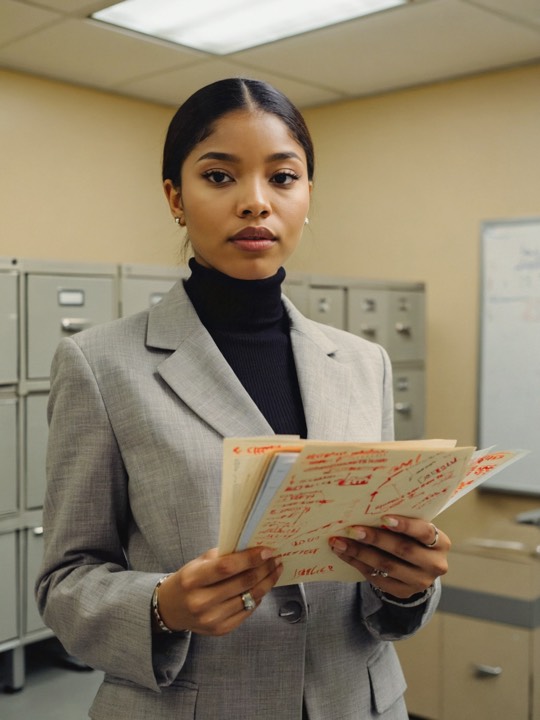
Never without a printout.
Boyd
SVP, Operations
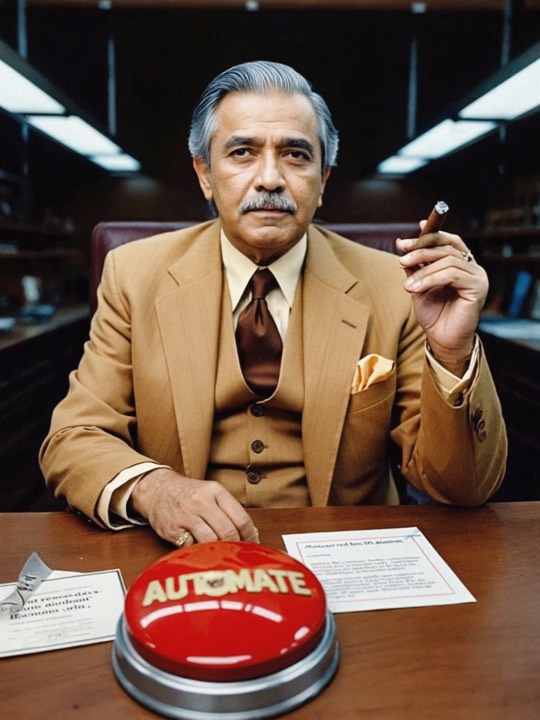
An unlit cigar he never lights.
Priya
Analyst
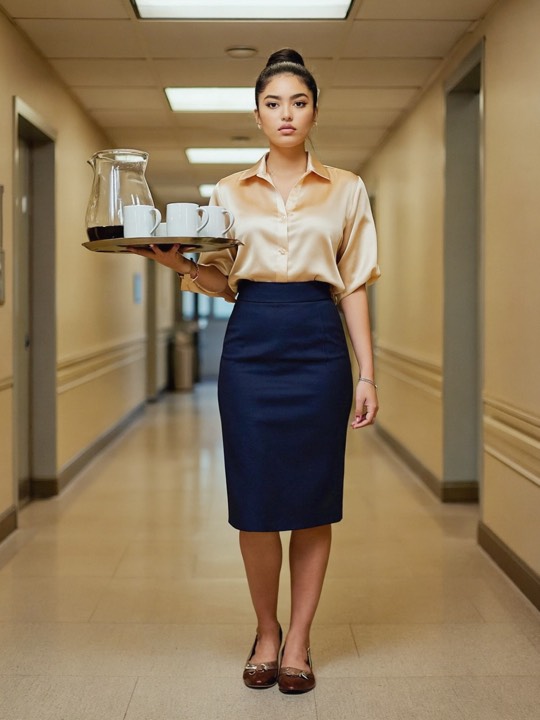
Carries the coffee for everyone.
FIG. 02 · The cast, generated as character seeds. Continuity is held by wardrobe, prop, and tell — not facial features. The suit does the identity work.
Before our big film shoot, we needed a shot list. Claude Design broke it down scene by scene, interspersing stock footage and scripted gags, laid out a plan for the edit, all decided before a single frame existed. Gags are rationed three-to-one against everything else, because we are a business after all, not a sketch show.
Shot List · Brand Reel15 SHOTS · 00:49
#IDShotType
01EX-01Man with briefcase walks past the buildingAmbient
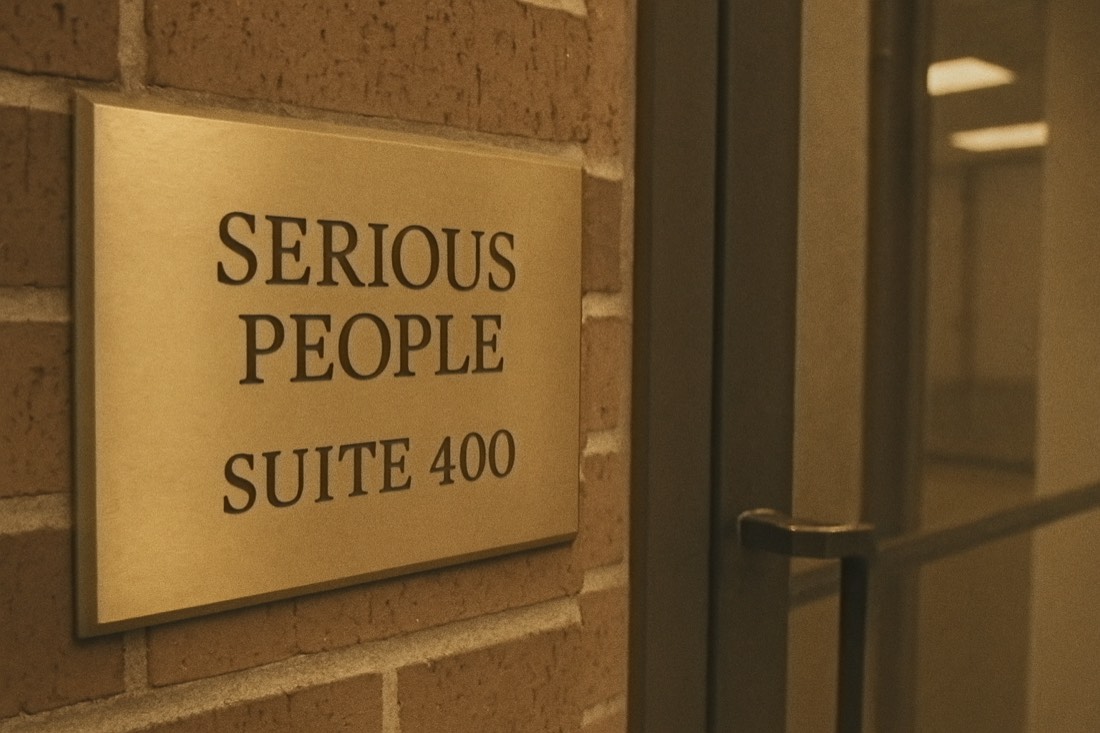
02EX-03“SERIOUS PEOPLE · SUITE 400” brass plaqueAmbient
03EL-01Four execs step out of the elevatorAmbient
04BR-00Whiteboard: HUMAN → AGENT → TOOL → OUTPUTHero
13WB-01Walter writes AUTOMATE on the whiteboardPeople
14PP-01Two execs walk and review a documentPeople
15OC-01"CLAUDE, VP Strategic Operations" in the binderGag
FIG. 03 · The shot list Claude built, as it went to production. Gags (in oxblood) are spaced at least three shots apart so each one lands clean.
§ 03Mistakes
Mistakes
We solved this by starting with a text-to-image prompt, refining the image until we loved it, and then using it as a keyframe to prompt a video. Text-to-image-to-video beat text-to-video on every shot we compared. It also gave us a chance to fine-tune more cheaply and more quickly with still images before spending the big bucks on video.
ex-03
el-01
bp-01
pp-02
em-01
mg-01
wb-01
oc-01
FIG. 04 · Eight source stills, straight out of gpt-image-1. Look at the legible text — the plaque, the nameplate, the org chart. That is the whole reason for the next note.
Still · gpt-image-1
Motion · Runway
FIG. 05 · Walter writes AUTOMATE. The still on the left is the literal input; the clip on the right is what Runway returns. Same frame, now breathing.
§ 04Motion
Using images to prompt video
Each approved still is fed to Runway as its first frame, with a prompt describing only the movement: a slow handheld drift, a sip, a hand writing on a whiteboard. Runway's minimum length is five seconds, so everything is generated longer than we need and trimmed later. Even with the image prompting trick, things still got weird sometimes.
Eventually, we had a folder on our Mac with a pile of approved clips, some of which were very, very funny.
§ 05Assembly
Fifteen clips, two formats, one grade
Lastly, editing. Claude Code watched all 15 clips, found the right start and stop points, came up with a pacing that it thought was very varied and interesting, and wrote down its detailed cut instructions in Markdown. Then it picked up FFmpeg and started editing — trimming, concatenating, and re-encoding to a uniform codec. The color grade isn't a CSS filter on the website; it's baked into the file here, so it can never drift between browsers. Mobile gets a dedicated 9:16 cut, with each shot hand-cropped to protect the gag.
§ 06Detours
The cutting-room floor
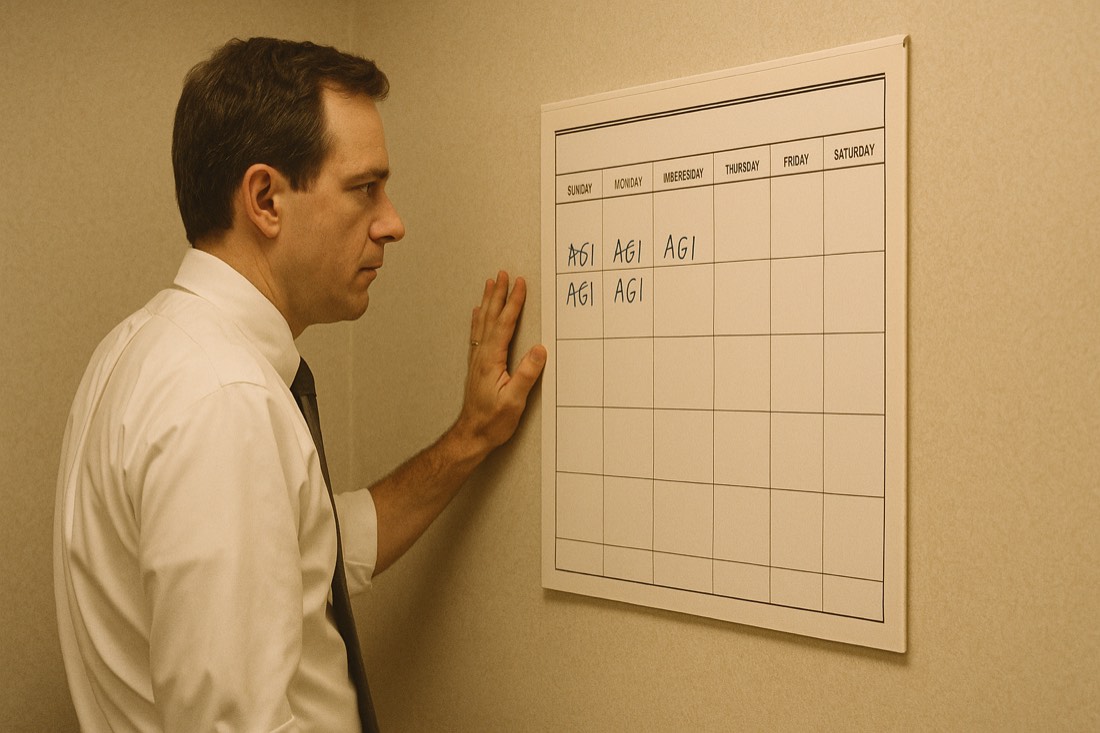
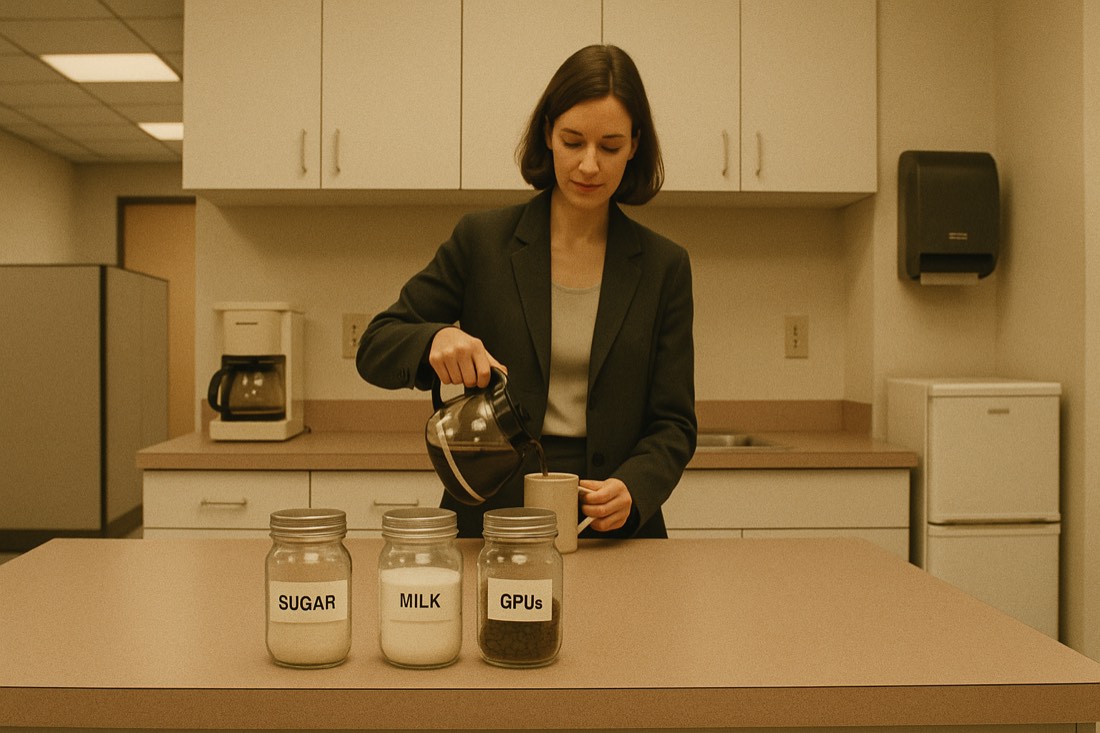
The reel is fifteen shots. We generated far more than that. Some gags were funnier on paper than the model could render; some fought physics and lost. They're worth showing, because the editing is the craft — knowing what to throw away is most of the job.
dr-01 · cut
dt-04 · cut
ph-06 · cut
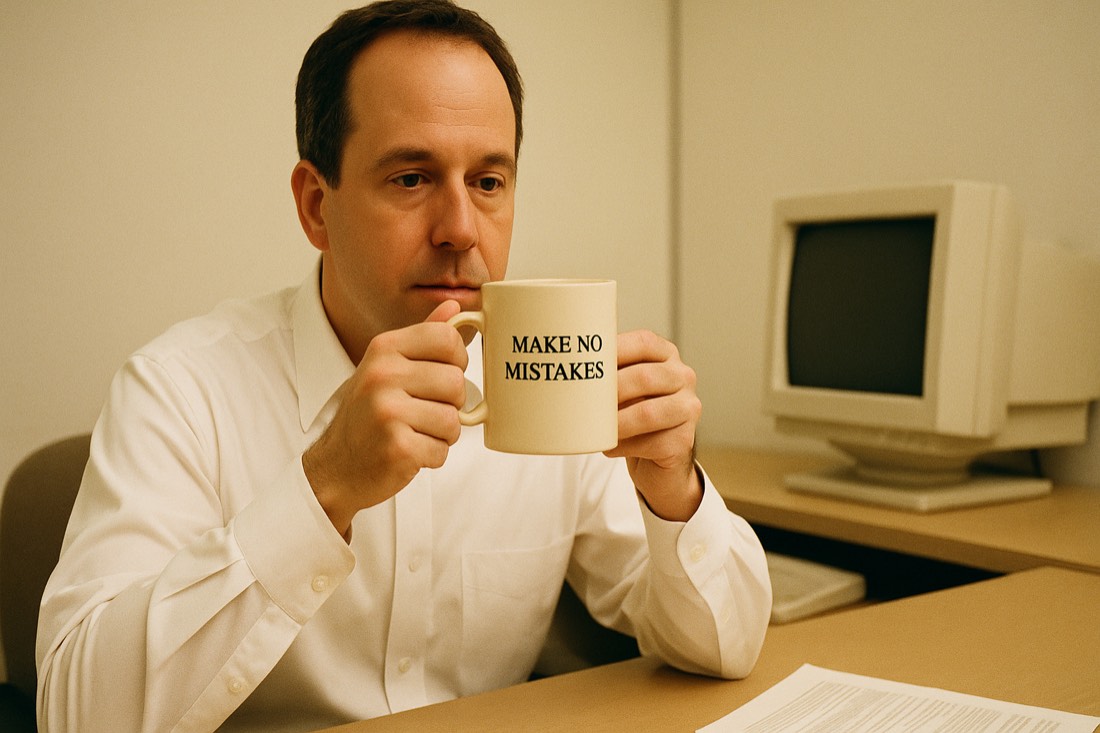
FIG. 06 · Filed away. A 'Model Eval — Do Not Disturb' door whose handle physics never resolved; a calendar with AGI crossed out weekly that the model couldn't render selectively; coffee jars labeled SUGAR / MILK / GPUs that only ever came back as a too-tight close-up.
§ 07The Payoff
Now that it works, it's a skill
The first time through, the pipeline was a working session and a lot of trial and error. So we turned it into a tool. The whole sequence — reference images, the prompt skeleton, the grade, the approve-then-animate gate — is now two reusable commands. Generate a still to brand spec. Approve it. Animate it.
Input
A line of brief
"Boardroom, exec at the whiteboard, gag on the slide."
Where·One sentence
Skill
Still on spec
Brand grade, cast, and props applied automatically.
Cmd·sp-photo
Skill
Approved → film
Only stills you've approved are ever animated.
Cmd·sp-video
FIG. 07 · The same pipeline, collapsed into a repeatable skill. What took a day of figuring-out the first time is now an afternoon's worth of asks.
For Serious People, the cost of making custom, on-brand work is now pocket change, and we can do it again and again. The skill that built a brand film is now teed up to make our next assets. We could never have hired a film crew and actors and editing team, but we can mess around for a day and generate a whole world. That's what it means, to us, to be serious about this.
Before you ask, here's the entire production budget.
Production Budget · Brand ReelEST · CURRENT API RATES
Stillsgpt-image-1 · ~70 generations × $0.25~$18
MotionRunway Gen-4.5 + Turbo · ~50 clips~$24
DetourHeyGen twin · voice clone + tests~$15
Crew, cast, location, catering—$0
Total≈ $60
FIG. 08 · Estimated at current API rates (gpt-image-1 $0.25/image; Runway $0.05–0.12/sec) against the documented shot count across three passes. The reel itself, without the dead-end avatar experiment, came in around $42.
COLOPHON
Direction
Brand book, cast, shot list, and prompts authored with Claude
Stills
OpenAI gpt-image-1 — character refs + text/prop generation
Motion
Runway Gen-4.5 (people) and Gen-4 Turbo (static gags), still-first
 ex-03
ex-03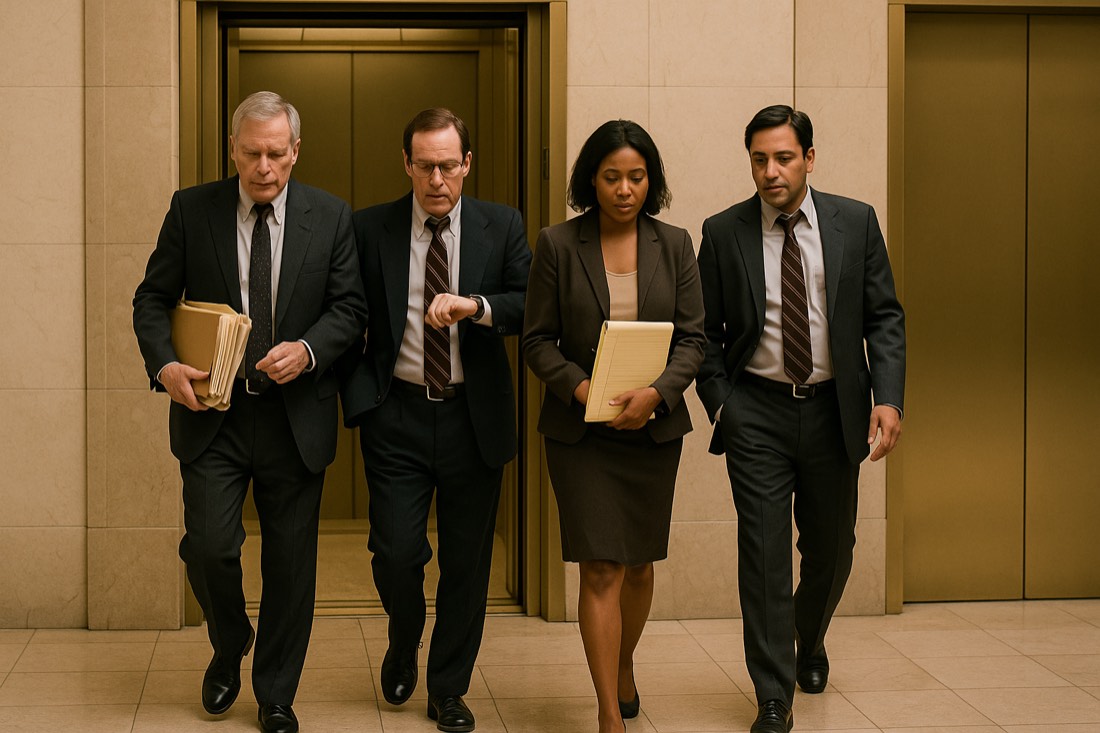 el-01
el-01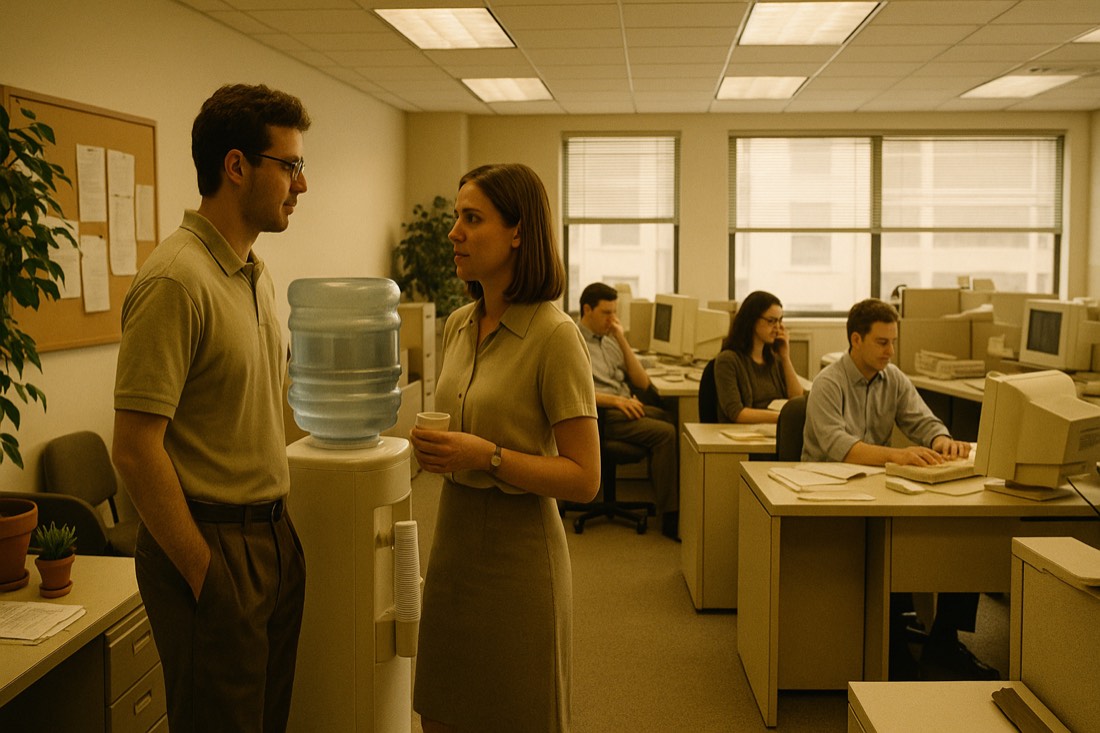 bp-01
bp-01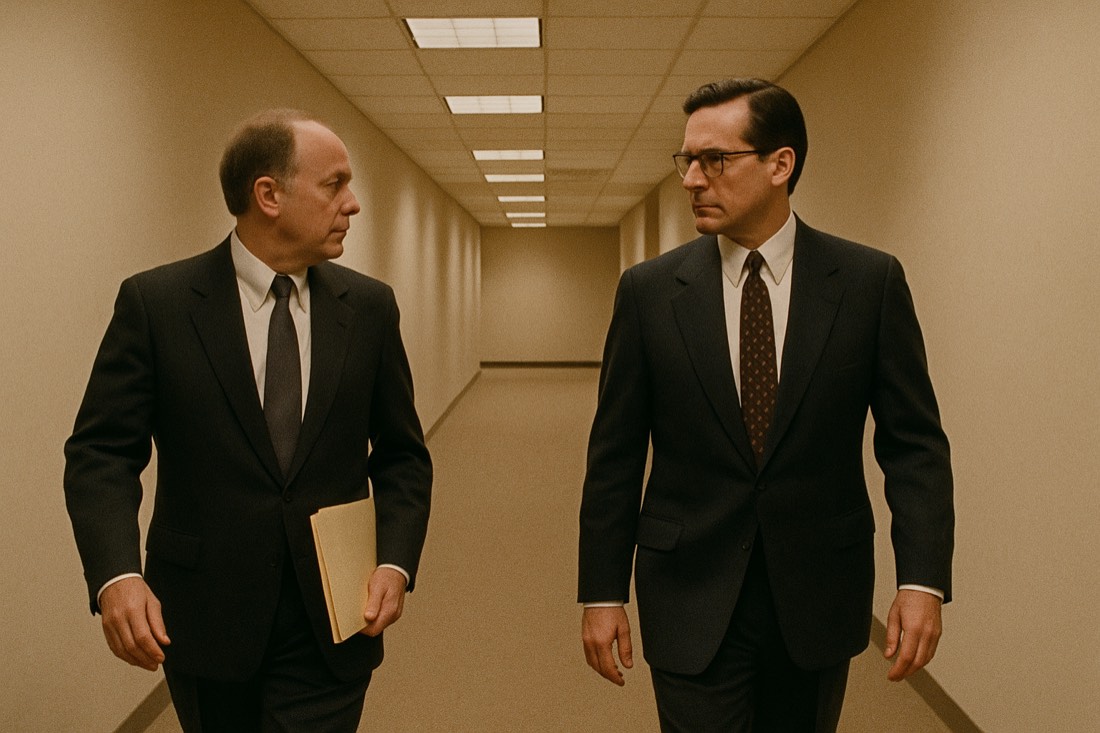 pp-02
pp-02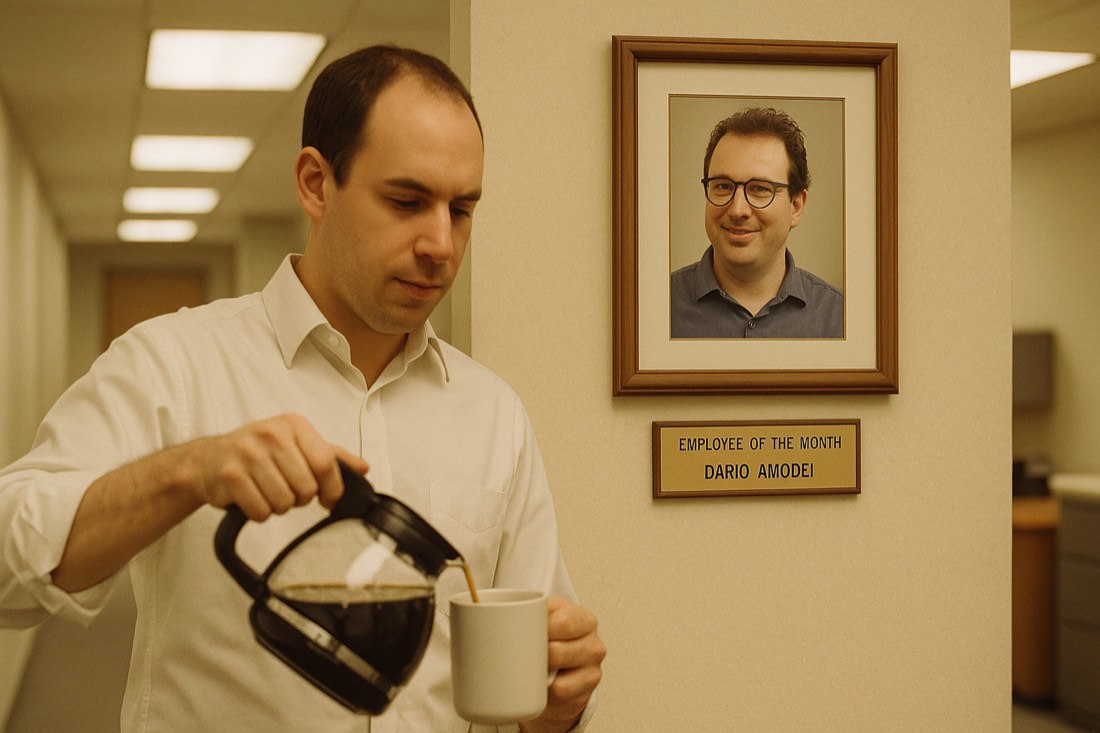 em-01
em-01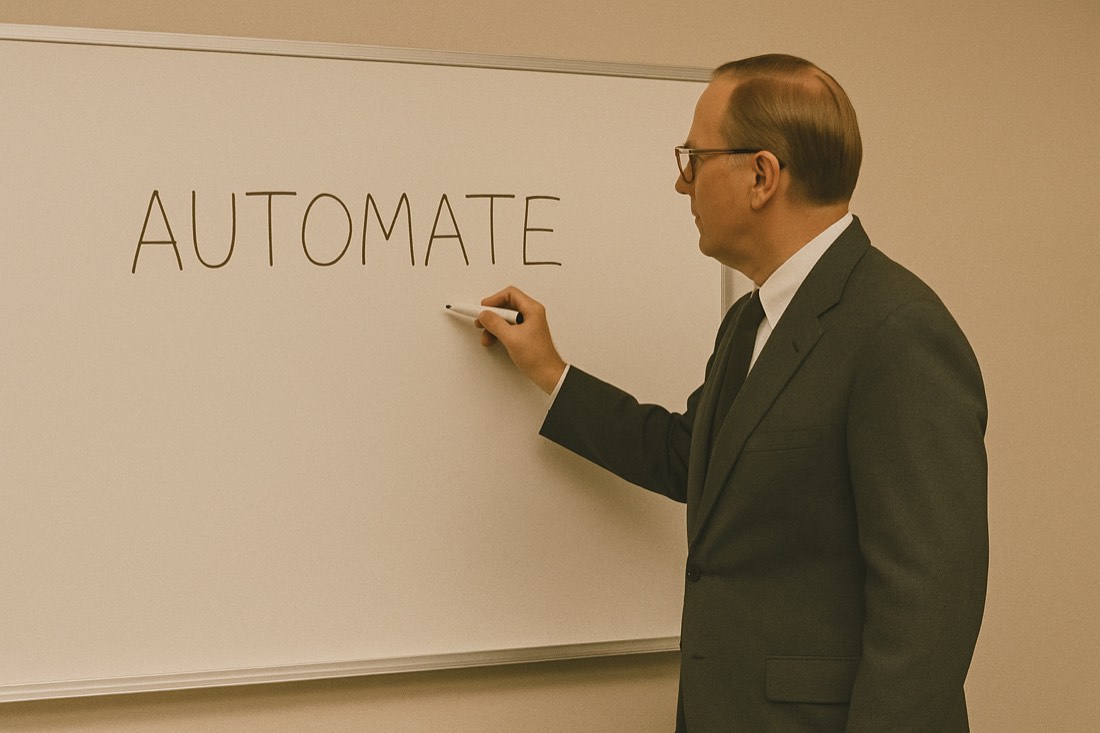 wb-01
wb-01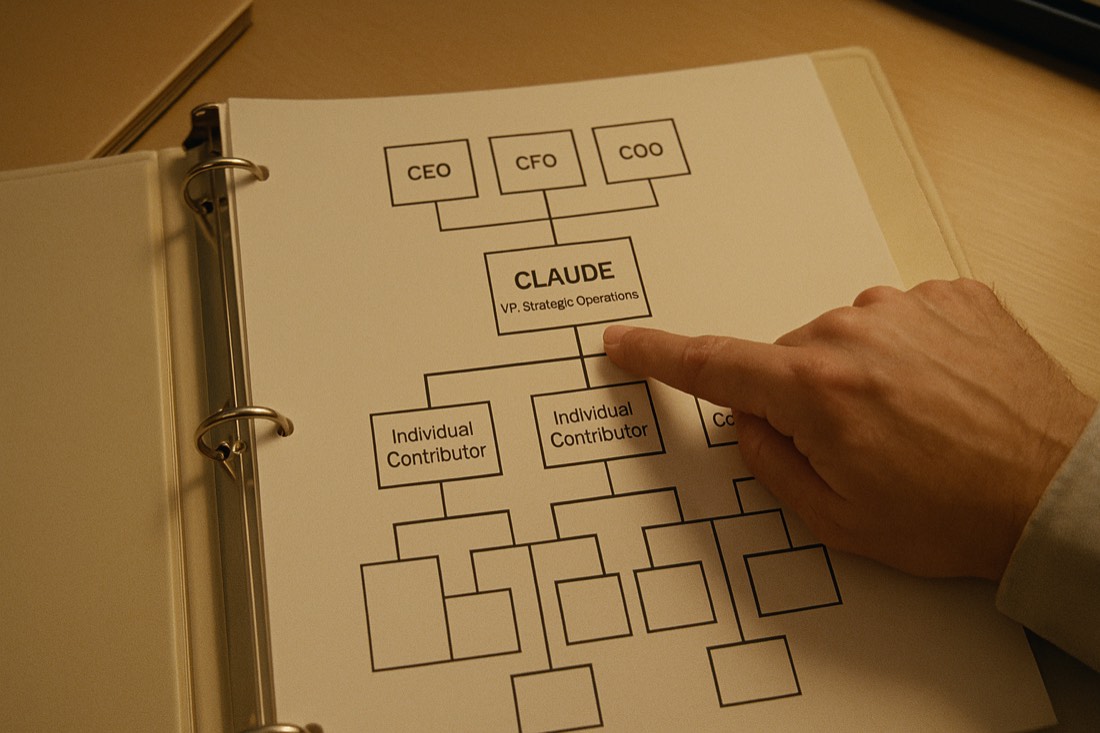 oc-01
oc-01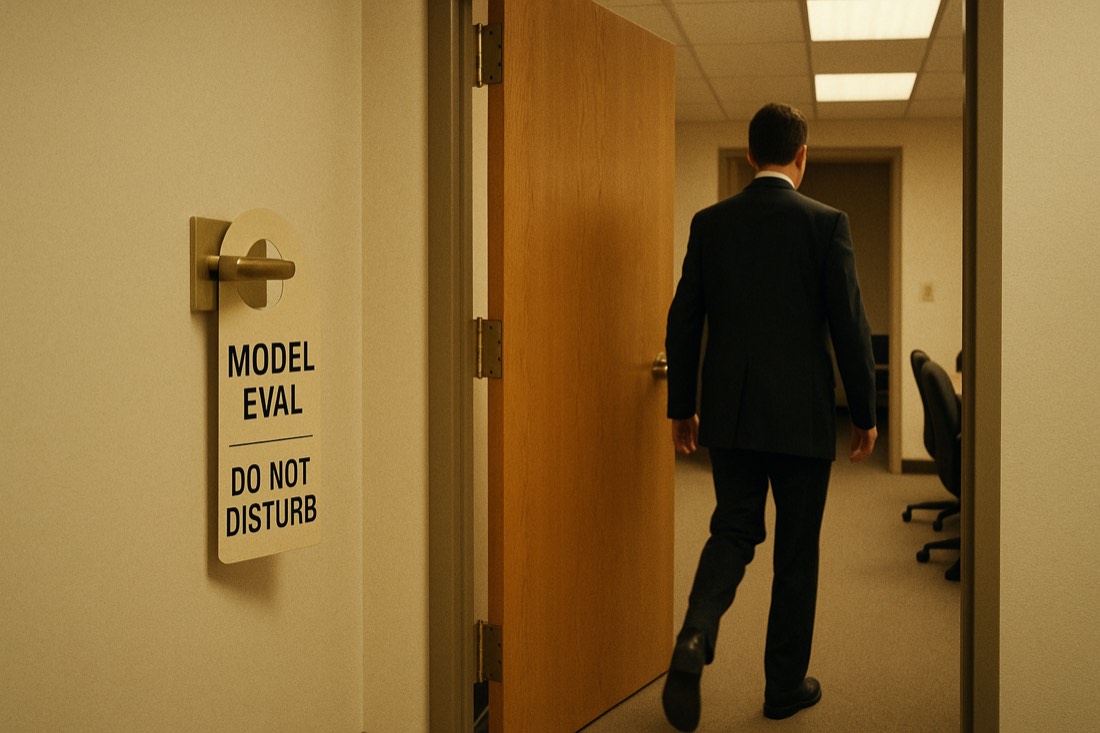 dr-01 · cut
 dt-04 · cut
 ph-06 · cut